
Chasing A Ghost
Donald Trump's obsession with putting his name on the Kennedy Center may have something to do with Nov. 22, 1963.

First he obliterates the Rose Garden, Jackie Kennedy’s once lasting contribution to the beauty of the White House.
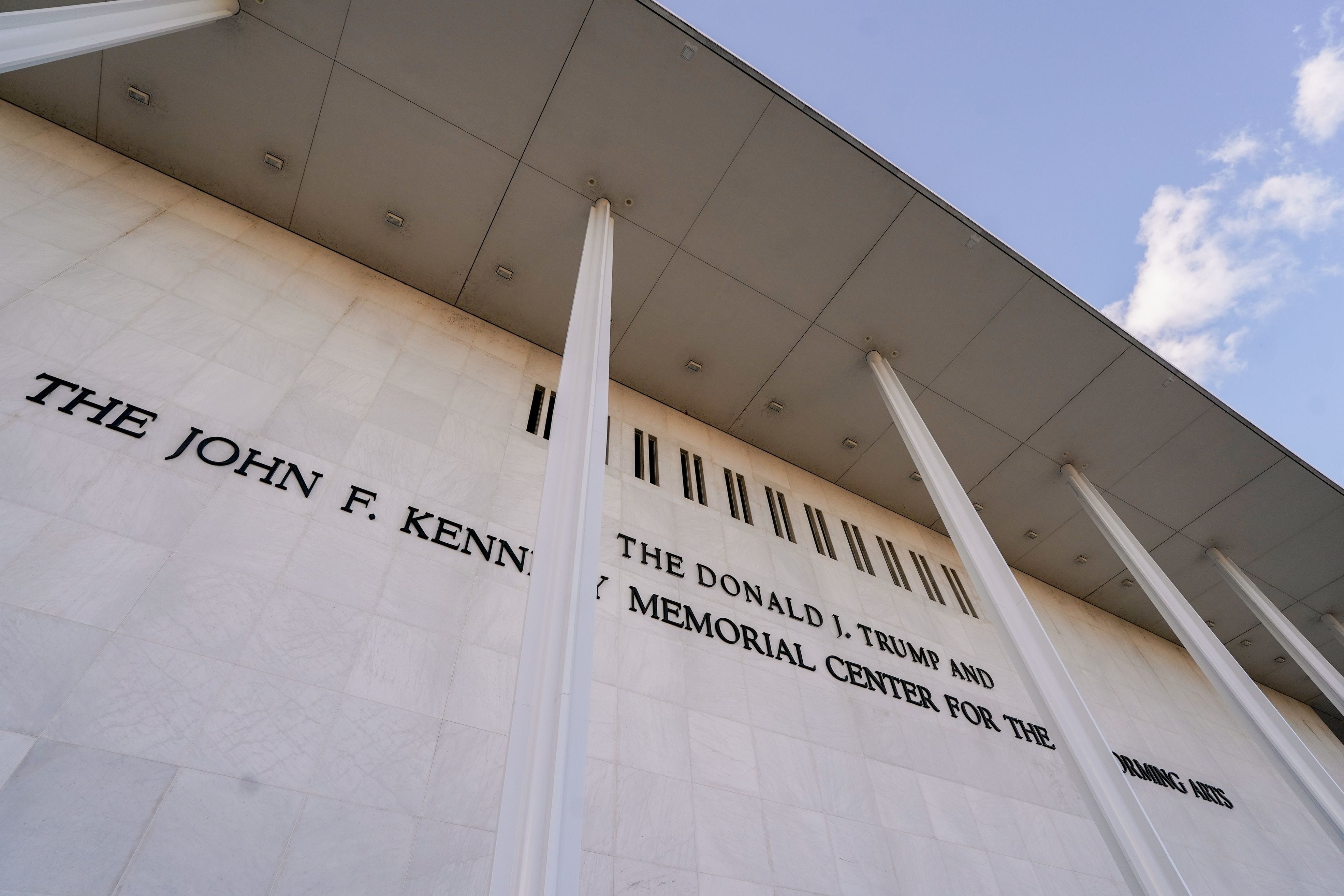
Then he fires the entire board that oversees the John F. Kennedy Center for the Performing Arts, and has his name added to the Kennedy Center and even has his name ABOVE that of Kennedy’s.
It’s no secret that that Donald Trump, the quintessential narcissist, is desperate to put his name on as many things as possible and leave his fingerprints on the American landscape to such a point that his many, many detractors will never be able to erase them completely.
Why is it so important for the 47th President to try and wipe away so much of Kennedy’s legacy, from Kennedy’s creation of USAID (one of the first government programs that Trump ended) and even changing the livery of Air Force 1 which had been in place since Jackie Kennedy chose the color scheme?
In my opinion, one needs to go back over sixty-two years ago, November 26, 1963.
During the four days that followed the assassination of President Kennedy, the depth of emotion that enveloped America also enveloped the world. Almost every embassy reported an outpouring of sympathy from the people of the host countries, many lined up by the hundreds and even thousands to sign books of condolences, including Soviet leader Nikita Khrushchev. In West Berlin, the square in front of city hall was renamed “John F. Kennedy Platz,” where 25,000 West Berliners held a torchlight ceremony. Television networks broadcast tributes to the fallen president, and royal families declared official days of mourning.
But it was on the day of the funeral itself that we got a glimpse of just how highly regarded Kennedy was, as was the United States.
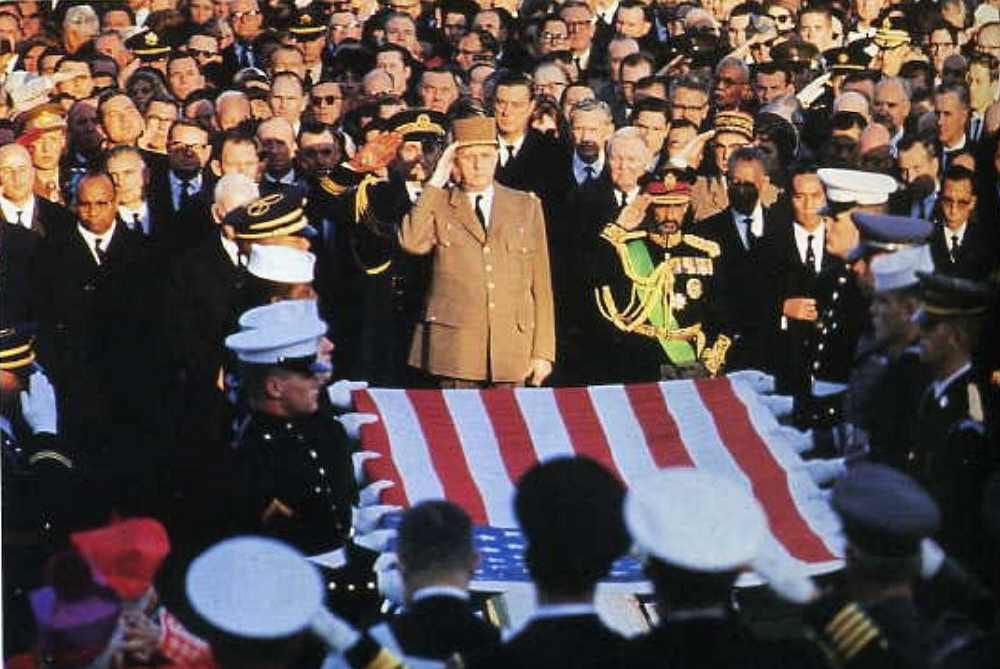
On Monday morning, after lying in state in the Rotunda of the Capital Building, Kennedy’s casket was placed onto the horse drawn caisson that had been used for FDR’s funeral and taken to the White House. Along the route it was estimated that as many as a million people were watching the procession in silent reverence and genuine grief. In the procession itself, was an assembly of 220 foreign dignitaries representing 90 countries. This included 20 heads of state and world leaders, the most notable being French President Charles DeGaulle, Emperor Haile Selassie, Irish President Eamon De Valera, British Prime Minister Alec Douglas-Home and West German Chancellor Ludwig Erhard. It was the largest assembly of dignitaries and world leaders since the funeral of King Edward VII in 1910, and it was by far the largest funeral in American history.
When it came time for the procession to head from the White House to St. Matthew’s Cathedral for the funeral mass, this impressive display of royalty and prestige did something extraordinary, and unplanned. Jackie, Bobby, President Lyndon Johnson and Lady Bird Johnson were joined by the dignitaries on foot as they walked all the way to the church. No one had prepared for it, and the security agencies of multiple countries were aghast at the unexpected vulnerability that this present, particularly in the case of DeGaulle who had already survived an assassination attempt and had been informed that another attempt was being planned in Washington. Despite the danger, DeGaulle was unfazed, neither was Selassie, Erhard or any of the others. They could have stayed in their limousines, an option that their bodyguards would most certainly have preferred.
This was not merely about security or diplomacy.
This was about RESPECT.
The world respected Kennedy, and through him respected the United States. But it was not a respect built on fear or sycophancy. It was a respect based on gratitude and admiration, admiration for the republic and its young leader who seemed to personify the promise of a brighter future for both America and for the world.
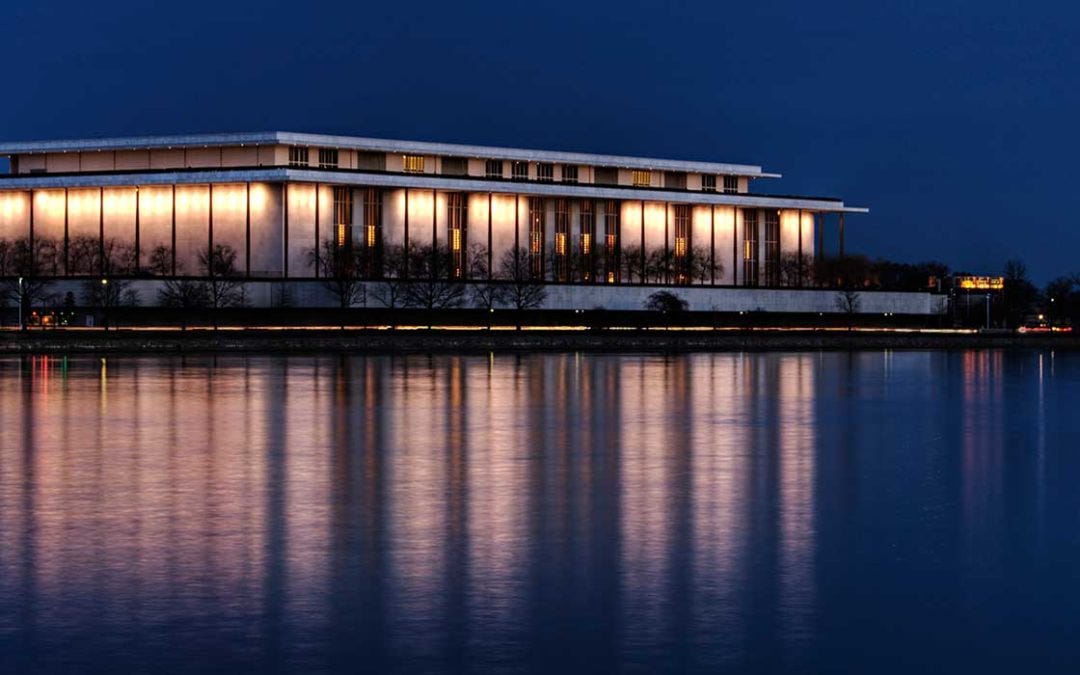
This feeling has been reflected in the multiplicity of places, streets, parks, schools, and public buildings that now bare his name. In New York, Idlewilde Airport was renamed John F. Kennedy International Airport. Cape Canaveral became Cape Kennedy. There was the John Fitzgerald Kennedy Memorial Wildlife Sanctuary, and John F. Kennedy Causeway. And of course the John F. Kennedy Center for the Performing Arts, which originally was to be named the National Cultural Center, but was changed by an act of Congress.
Canada would name a peak in the Saint Elias Mountains “Mount Kennedy.” In the UK, three acres of the meadow at Runnymede, where the Magna Carta was signed, was dedicated to JFK’s memory. The number of places across the globe are too many to count.
Trump saw all of this, and still does. A part of him, the part that yearns for the Nobel Peace Prize and wants his name attached to the arts and to higher ideals, desperately wants to be remembered like JFK.
But he can’t.
It’s not in him to be a man of vision, to appeal to our better nature. That’s simply not how he is wired. And he knows it.
The world does not now nor ever will look at him the way it looked to John F. Kennedy. And the same, sadly, goes with the United States.